Quick Summary
The felony case process in Texas usually begins with an arrest or investigation, followed by booking and a magistrate review that determines your bond or detention. Prosecutors then present evidence to a grand jury, which decides whether to issue an indictment and move the case forward in court.
A felony arrest places a case into a structured legal pathway that determines whether formal charges will move forward in court. The felony case process in Texas includes several stages between the initial arrest and the point where prosecutors seek a grand jury indictment. Each stage allows courts and prosecutors to evaluate evidence, review legal procedures, and ensure constitutional protections are followed.
Understanding this process can clarify why felony cases take time to develop and why multiple court appearances may occur before formal charges are filed. Texas Criminal Defense Attorneys explain how courts review arrests, evaluate probable cause, and determine whether prosecutors should present a case to a grand jury under Texas criminal procedure.
Felony Arrest Initiates Texas Criminal Court Procedures
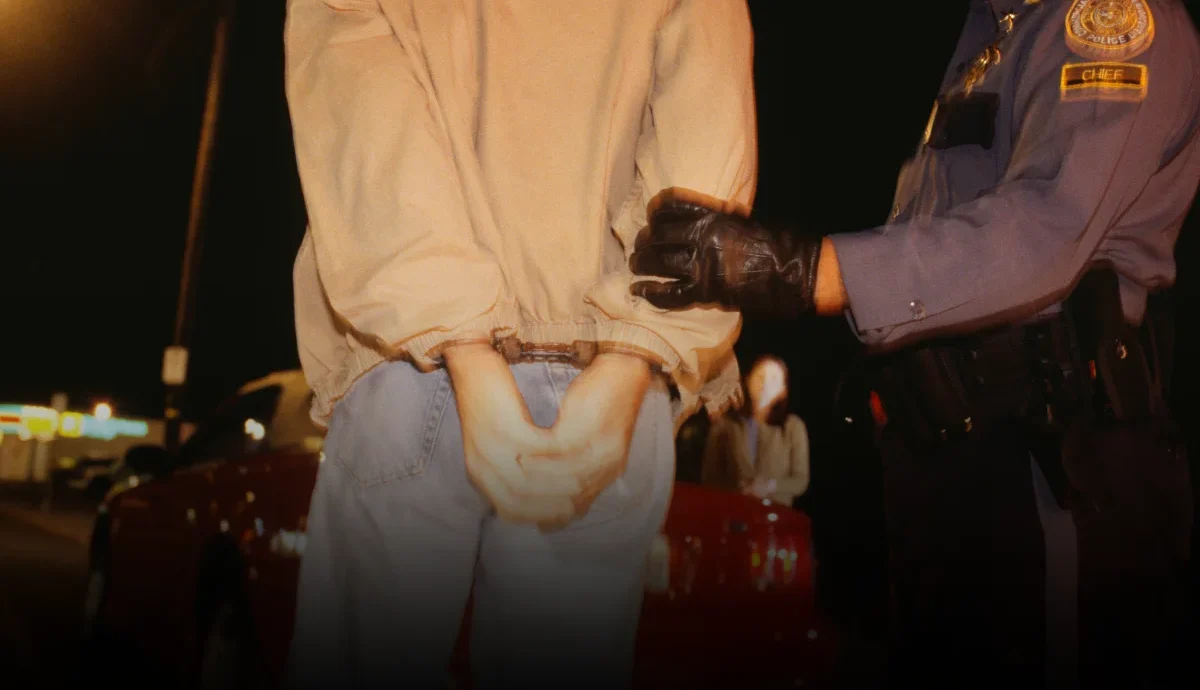
A felony case typically begins with an arrest by law enforcement officers who believe probable cause exists that a crime occurred. Under Texas Code of Criminal Procedure Article 14, officers may make certain arrests without a warrant when probable cause supports that a felony offense has been committed.
After an arrest, the individual is taken to a local detention facility for booking and processing.
During booking, several administrative steps occur, including:
- Recording personal identification information
- Documenting the alleged offense
- Collecting fingerprints and photographs
- Entering the arrest into official records
Within a short time after the arrest, the individual must appear before a magistrate judge. The magistrate reviews the arrest and determines whether probable cause supports continued detention or whether bond may be set.
Magistrate Review Determines Probable Cause And Bond
Shortly after an arrest, a magistrate hearing determines whether the case can legally continue. The judge reviews whether law enforcement had sufficient probable cause for the arrest.
During this stage, the magistrate performs several key functions:
- Informing the accused of the charges
- Explaining the right to legal counsel
- Setting bond or other pretrial conditions
- Determining whether detention should continue
Bond decisions may depend on several factors, including the seriousness of the alleged offense, prior criminal history, risk of failing to appear in court, and potential safety concerns for the community.
This hearing is often the first opportunity for individuals to understand the allegations against them and the possible path their case may follow. After reviewing these principles, some individuals choose to speak with a criminal defense attorney to understand how impeachment rules may apply to their specific case.
Prosecutor Evidence Review Before Grand Jury Presentation
After the initial court appearance, prosecutors review the evidence gathered by investigators. This stage determines whether the case is strong enough to present to a grand jury.
Prosecutors may evaluate:
- Police reports and witness statements
- Physical or digital evidence
- Forensic analysis
- Statements made during the investigation
The prosecutor does not immediately file felony charges in most situations. Instead, the case is often prepared for grand jury review, which acts as an independent body that decides whether sufficient evidence exists for an indictment as part of the felony court process Texas follows in serious criminal cases.
Legal strategy and case preparation often depend on how drug charges are categorized under Texas statutes, which can influence how prosecutors structure certain felony allegations. Under Texas Penal Code Chapter 12, Texas law outlines punishment classifications that may apply to felony offenses depending on how charges are structured.
Timeline Of Felony Case Development In Texas
Felony cases follow a structured progression from arrest to indictment within the Texas criminal justice system. Each stage allows courts and prosecutors to review evidence and determine whether the case should continue moving forward.
In some cases, prosecutors may revise the charge if the evidence supports a different misdemeanor offense.
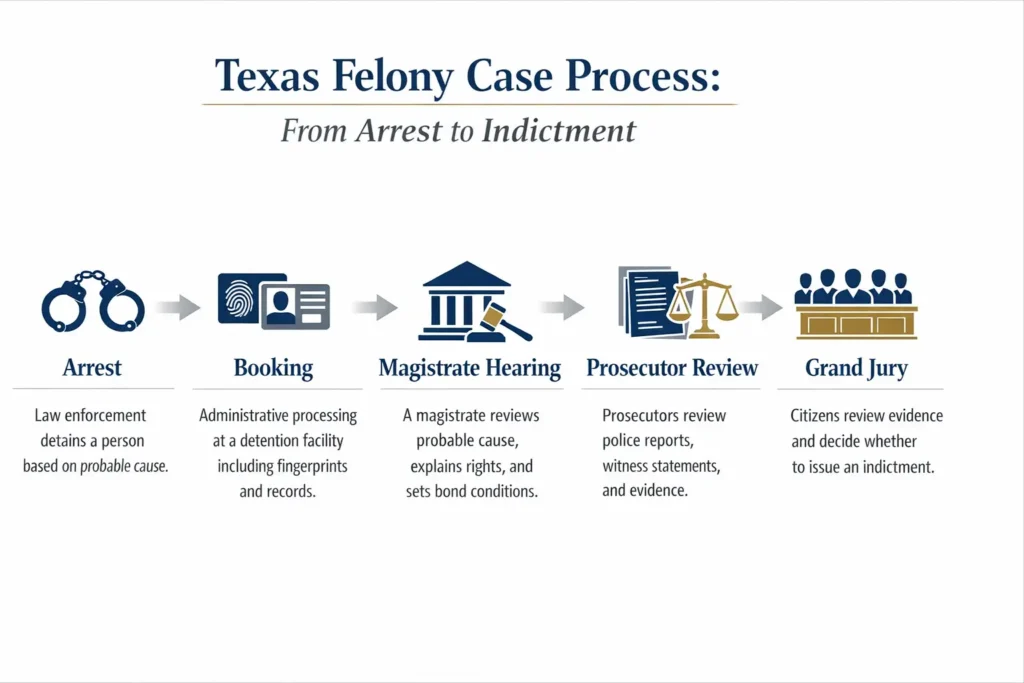
Each stage plays a specific role in the early development of a felony case. Courts and prosecutors review the available information step by step to determine whether sufficient evidence exists to move the case forward. These procedures allow the legal system to evaluate probable cause, organize investigative findings, and decide whether the allegations should be formally presented to a grand jury.
Seeing how these stages connect can make the process easier to follow. In some situations, courts may also examine how theft charges are structured under Texas law, since offense classifications can influence whether prosecutors pursue felony-level accusations.
Grand Jury Role In Texas Felony Charging Process
The grand jury determines whether sufficient evidence exists for a felony case to proceed in the Texas criminal court system. During this stage, prosecutors present evidence, witness statements, and investigative information to a panel of citizens who review the allegations. If jurors conclude that probable cause supports the charge, they may return an indictment that formally allows the felony case to move forward in district court.
Procedures for Presenting Evidence to Grand Juries
During a grand jury presentation, prosecutors provide evidence and witness testimony to a panel of citizens who review felony allegations. These proceedings occur privately and are generally not open to the public. Prosecutors may present investigative reports, witness statements, and other materials that help explain the circumstances surrounding the alleged offense.
After reviewing the information, the grand jury decides whether probable cause exists to believe that a felony offense occurred. The jurors may reach several possible outcomes during this review process:
- True Bill – The grand jury determines that sufficient evidence exists and approves the indictment, allowing the felony case to proceed in district court.
- No Bill – The grand jury concludes that the evidence does not support an indictment, meaning the felony charge does not move forward at that time.
- Further Investigation – In some situations, the grand jury may request additional information or evidence before deciding whether an indictment should be issued.
These outcomes determine whether the case advances in the Texas criminal court system or requires further review before prosecution continues.
Indictment Creates Formal Felony Criminal Case
An indictment is the formal charging document that allows a felony case to proceed in a Texas district court. When a grand jury issues an indictment, it means the jurors determined that probable cause exists to believe a felony offense was committed and that the accused person may be responsible for the alleged conduct.
Once the indictment is returned, the case officially becomes a criminal prosecution handled within the district court system. At this point, the court schedules additional proceedings that may include arraignment, pretrial hearings, evidence exchange between attorneys, and other procedural steps required before trial.
The requirement that felony charges proceed through a grand jury indictment is established under Texas Constitution Article I, Section 10.
Felony Cases Progress Through Texas Criminal Courts
The progression from arrest to indictment represents only the early part of a felony case. However, it plays an important role in determining whether the case will proceed to trial, plea negotiations, or dismissal.
During this phase, the legal system evaluates the strength of the allegations and determines whether formal charges should exist. The felony case process in Texas includes several layers of review, including prosecutorial evaluation and grand jury consideration, designed to balance law enforcement authority with legal protections for the accused. These procedures help ensure that felony cases move forward only when the available evidence supports the allegations presented in court.
Texas Criminal Defense Attorneys assist individuals by explaining how criminal procedures apply under Texas law. For additional clarification, you may book a free case evaluation by calling (346)485-4545 or visiting the Contact Us page.
Frequently Asked Questions
How long does the felony case process take before indictment?
A felony investigation may take several weeks or sometimes months before prosecutors present evidence to a grand jury. The felony case process in Texas often includes reviewing police reports, examining evidence, interviewing witnesses, and completing forensic analysis. Prosecutors typically wait until they believe the available evidence supports probable cause before asking a grand jury to consider issuing a formal indictment.
What rights does a person have during a felony investigation in Texas?
Individuals involved in a felony investigation have several important legal rights under Texas law. A person generally has the right to remain silent, the right to consult with an attorney, and the right to avoid self-incrimination during questioning. Law enforcement officers must also follow constitutional rules when conducting searches, collecting evidence, or making an arrest during a criminal investigation.
Can a felony case proceed without a grand jury indictment?
No, most felony cases in Texas require a grand jury indictment before prosecution can proceed in district court. The indictment serves as a formal accusation that probable cause exists to believe the defendant committed the alleged offense. In limited circumstances, a defendant may waive the right to a grand jury indictment and allow the case to proceed based on an information filed by prosecutors.
What role do district courts play in felony cases in Texas?
District courts handle felony criminal cases in Texas and oversee many of the proceedings that occur after an indictment. Judges in district courts manage hearings, rule on pretrial motions, supervise the exchange of evidence between attorneys, and schedule trial dates. These courts also ensure that legal procedures are followed while the case progresses through the criminal justice system.
Can prosecutors dismiss a felony case after an indictment is issued?
Yes, prosecutors may decide to dismiss a felony case even after an indictment has been issued. New evidence, witness issues, or legal problems with the investigation may affect whether the case should continue. In some situations prosecutors may request dismissal if the evidence no longer supports the allegation or if legal issues arise that could prevent the case from moving forward.