

Quick Summary
If you are convicted of assault in Texas, the penalties can include fines, jail time, probation, or other court-ordered conditions depending on how the offense is classified. Assault penalties in Texas may vary based on factors such as injury, prior convictions, and the identity of the alleged victim. These penalties are determined under current Texas criminal laws and sentencing guidelines.
Facing an assault charge can be confusing because penalties vary depending on the severity of the accusation and the circumstances involved. Courts review factors such as injuries, prior history, and the relationship between the people involved when determining possible consequences. After a conviction, courts follow Texas sentencing laws to determine the appropriate punishment based on the level of the offense and the facts of the case.
Understanding assault penalties in Texas helps you see how charges are classified and what legal consequences may follow. Texas Criminal Defense Attorneys help individuals understand how courts evaluate assault cases and possible penalties.
Understanding How Assault Penalties Are Applied in Texas
Assault penalties in Texas depend on how the offense is classified and the specific facts of the case. Not all assault charges carry the same penalties. Some assault offenses are misdemeanors that may result in fines or county jail time, while more serious cases may be charged as felonies that can lead to prison sentences. These penalty ranges are established under the Texas Penal Code and Texas sentencing laws.
The classification of an assault case may depend on factors such as whether bodily injury occurred, the seriousness of the injury, the relationship between the people involved, whether a weapon was used, and whether the person has prior assault convictions. These factors can affect the level of the charge and the possible penalty range.
Texas law sets different penalty ranges for each level of assault offense. Understanding how assault charges are classified can help explain why penalties vary from case to case.
Assault Charges Are Classified Based On Severity
Assault charges in Texas are classified based on the seriousness of the alleged conduct and the resulting harm. The classification determines the range of possible penalties after a conviction.
In Texas, assault can be charged as either a misdemeanor or a felony depending on factors such as injury, threats, or prior convictions. Sentencing exposure depends on how assault charges are classified under Texas law, which is explained in the context of how assault charges are handled in Texas courts through the Texas Assault Defense practice area.
According to the Texas Penal Code §22.01, assault may involve the following:
- Causing bodily injury to another person
- Threatening another person with imminent bodily injury
- Causing physical contact that is considered offensive or provocative
Different Levels Of Assault Charges Carry Different Penalties
Different assault classifications carry different penalties, ranging from fines to prison time. The classification depends on injury level, victim type, and prior offenses.
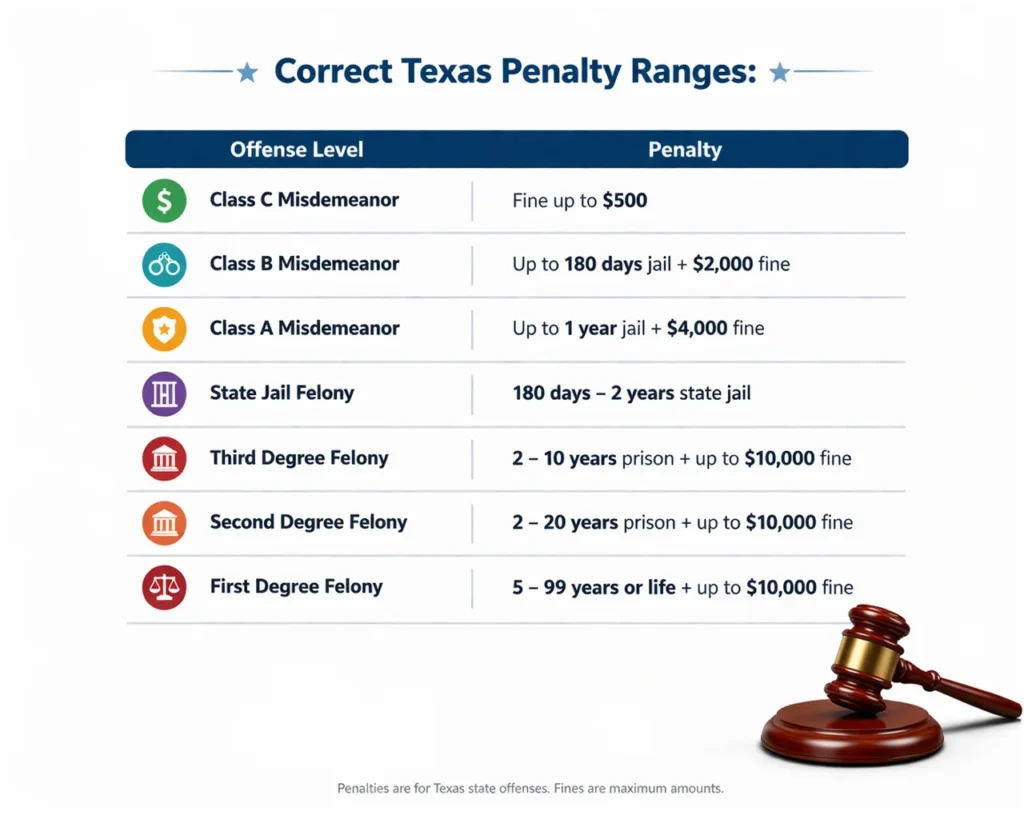
Class C And Class B Assault Penalties
Class C and Class B assault charges are generally considered lower-level offenses. These usually involve threats or offensive contact without serious injury.
Penalties may include fines, short jail sentences, or community supervision. Even lower-level convictions may still create a permanent criminal record, which can affect employment or housing opportunities.
Class A – Assault Charges And Penalties
Class A misdemeanor assault typically involves bodily injury. This is one of the most common assault charges in Texas.
If convicted, penalties may include:
- Up to one year in county jail
- Fines up to $4,000
- Probation or community supervision
- Anger management or counseling
- Protective orders in some cases
Felony Assault Penalties And Prison Exposure
Felony assault charges involve more serious circumstances such as serious bodily injury, use of a weapon, or assault against certain protected individuals.
Felony penalties may include:
- Prison sentences
- Larger fines
- Long-term probation
- Parole supervision
- Permanent felony record
Factors That Can Increase Assault Penalty Severity
Several factors can increase the severity of assault penalties. Courts consider specific circumstances when determining how charges are filed and sentenced. In some situations, assault penalties Texas become more serious when aggravating factors are present.
These factors may include prior convictions, the level of injury, and whether a weapon was involved. Aggravating factors can increase the severity of certain assault offenses and may result in felony charges instead of misdemeanors, which can significantly affect assault conviction punishment Texas outcomes.
Common aggravating factors include:
- Prior assault convictions
- Family violence allegations
- Use of a weapon
- Serious bodily injury
- Assault against a public servant
- Assault against a family member or partner
Legal consequences vary depending on how sex crime allegations are charged in Texas when assault allegations involve sexual contact, which is part of the Texas Sex Crimes Defense legal area.
Additional Consequences Beyond Jail Time Or Fines
An assault conviction can lead to additional consequences beyond jail time or fines. Courts may impose conditions that affect your daily life even after the case is completed.
Possible additional consequences include:
- Protective orders
- Loss of firearm rights in certain cases
- Probation conditions
- Mandatory counseling programs
- Community service
- Permanent criminal record
- Immigration consequences in some situations
Protective orders may be issued in certain assault cases, particularly those involving family violence, under Chapter 85 of the Texas Family Code, which governs the issuance of protective orders.
These consequences can sometimes last longer than the jail sentence itself, depending on the type of assault conviction.
Courts Consider Evidence And Case Circumstances Carefully
Courts evaluate evidence and case details before sentencing in assault cases. The outcome depends on facts presented in court and how the offense is classified. Judges review the circumstances of the incident, the type of injury, and the conduct involved when determining penalties.
Judges may consider:
- Injury severity
- Witness statements
- Medical records
- Prior criminal history
- Whether the incident involved family violence
- Whether a weapon was used
Because every case is different, penalties can vary significantly even for similar charges. Courts may also consider whether the incident involved intent, recklessness, or negligence when reviewing the facts of the case. Prosecutors must prove the elements of the offense beyond a reasonable doubt before a conviction can result in criminal penalties. In some cases, plea agreements, prior criminal history, and the specific circumstances of the incident may also influence the final outcome of the case and the penalties imposed by the court.
Assault Penalties and Punishment Under Texas Laws
Understanding assault penalties Texas is important because penalties depend on how the offense is classified and the specific facts of the case. Assault convictions can lead to fines, jail time, probation, protective orders, and long-term criminal records depending on whether the offense is charged as a misdemeanor or felony.
Courts consider injury severity, prior convictions, victim identity, and other factors when determining sentencing. Because assault cases vary widely, understanding how charges are classified and prosecuted can help you better understand the legal process and potential consequences after a conviction.
If you would like general information about assault charges or the Texas criminal process, Texas Criminal Defense Attorneys can help explain how assault cases are handled and what legal options may be available. You may contact us at (346)485-4545 or visit the Contact Us page to learn more.
Frequently Asked Questions
Can an assault conviction affect employment opportunities?
Yes, an assault conviction can affect employment opportunities because criminal records may appear in background checks conducted by employers. Some employers review misdemeanor and felony records when making hiring decisions, especially for jobs involving public safety, finance, or government work. A conviction may also affect professional licensing in certain industries depending on the nature of the offense and licensing requirements.
Can assault charges be reduced before trial?
Yes, assault charges can sometimes be reduced before trial depending on the evidence, witness statements, and circumstances of the case. Prosecutors may review the strength of the evidence and the severity of the alleged conduct when considering plea agreements. In some situations, charges may be reduced to a lower offense through negotiation before the case goes to trial.
What is the difference between deferred adjudication and a conviction in Texas assault cases?
Deferred adjudication and a conviction are not the same under Texas law. In some assault cases, a person may be placed on community supervision without a final conviction if the court accepts that outcome. However, eligibility depends on the charge, case facts, and whether family violence findings are involved. This can affect criminal record consequences differently than a standard conviction.
Can assault charges affect firearm ownership rights?
Yes, assault charges can affect firearm ownership rights in certain situations, especially if the case involves family violence. Federal and Texas laws may restrict firearm possession after certain assault or family violence convictions. These restrictions can apply even after probation is completed and may have long-term legal consequences depending on the type of conviction.
Can an assault conviction in Texas be sealed or removed from your record?
Some cases involving assault penalties Texas may qualify for record relief, but eligibility depends on how the case ended and the type of offense involved. A conviction usually creates more limits than a dismissal or deferred outcome. Cases involving family violence often carry added restrictions. Record-clearing options may include nondisclosure or expunction in limited situations under Texas law.
